When the Internet Fails: Designing an Offline-First Mesh Communication System with ESP32
How offline-first thinking, ESP32 devices, and peer-to-peer communication can produce self-healing mesh systems without routers, servers, or internet access.

Aaditya Binod Yadav
Backend Engineer, distributed systems builder, and writer
During disasters, the first thing to fall is not buildings but it is connectivity.
Earthquakes, floods, and power outages routinely take down cellular towers, Wi-Fi infrastructure, and cloud services. Yet, most modern communication systems are designed with an assumption: the internet will be available.
This article here explores a different approach. This is about offline-first, peer-to-peer communication and how a simple embedded system that uses ESP32 micro controllers can make a self healing mesh network without any external infrastructure.
The Core Problem
Most emergency communication solutions rely on:
- GSM networks
- Centralized servers
- Cloud-based coordination
In real disaster scenarios, these dependencies become liabilities.
The question is simple but powerful:
How can devices communicate when there is no internet, no router, and no central authority?
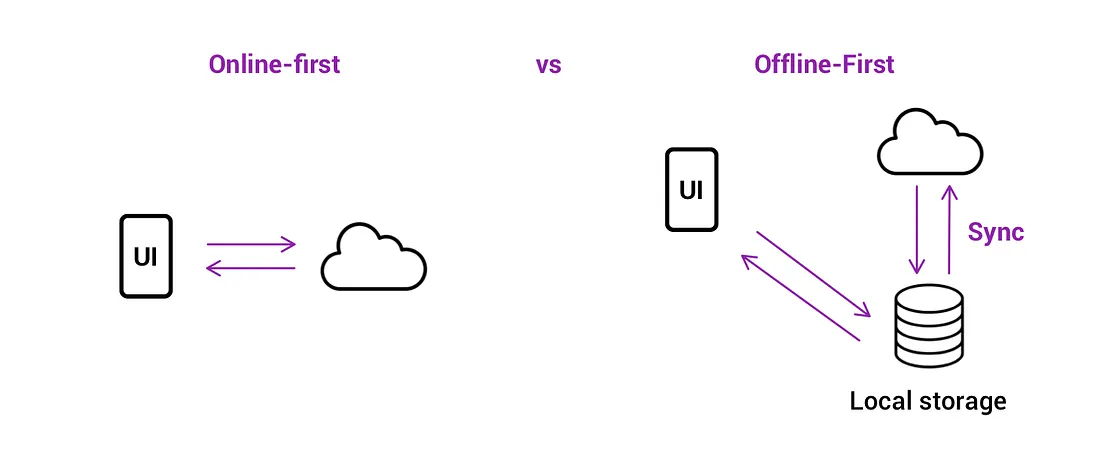
Offline-First Systems
An offline-first system treats connectivity as a bonus, not a requirement.
Key principles:
- Devices must work independently
- Data should be stored locally
- Synchronization should happen opportunistically
- No single point of failure should exist
This naturally leads to mesh networking.
Why Mesh Networks?
In a mesh network:
- Every node can communicate with nearby nodes
- Messages are forwarded hop-by-hop
- If one node fails, others reroute automatically
- There is no “main server”.
The network emerges dynamically from local interactions.
This architecture is ideal for:
- Disaster response
- Rural communication
- Military and rescue operations
- Any connectivity-constrained environment
Why ESP32?
ESP32 is more than just a microcontroller.
It integrates:
- A CPU (for logic)
- Wi-Fi and Bluetooth radios (for communication)
- Enough memory to store messages locally
Most importantly, ESP32 supports ESP-NOW, a lightweight peer-to-peer protocol that allows devices to communicate without Wi-Fi routers or internet access.
This makes it a perfect candidate for infrastructure-less networks.
Communication Without “Connecting”
A common misconception is that devices must “connect” to something to send messages.
With ESP-NOW:
- Devices send radio packets directly
- No pairing
- No access point
- No IP networking
Each ESP32 transmits data that nearby ESP32 devices can receive using their built-in Wi-Fi radio.
Communication happens at the link layer, not the internet layer.
Logical Mesh, Not Physical Wiring
An important insight is that mesh topology is logical, not physical.
There are no special wires or hardware connections forming the mesh. The topology is created by software rules:
- Nodes discover nearby neighbors
- Messages are forwarded based on local knowledge
- Duplicate messages are ignored
- Failed nodes are automatically avoided
The mesh emerges from these behaviors.
Routing Without Complex Algorithms
Traditional networks use complex routing protocols. In disaster scenarios, simplicity wins.
This system uses:
- Controlled flooding
- Duplicate suppression
- Store-and-forward logic
Each node:
- Receives a message
- Checks if it has seen it before
- Forwards it to neighbors if not
- Stores it locally if no neighbors are available
This approach enables delay-tolerant networking, where messages survive temporary disconnections.
Self-Healing by Design
If a node goes offline:
- Neighbor nodes stop receiving heartbeats
- The node is removed from forwarding decisions
- Messages automatically flow through alternate paths
No manual reconfiguration is needed.
Fault tolerance is an emergent property of the system.
Visualizing the System
To make such systems observable:
- LEDs indicate node status
- Serial logs show message flow
- A gateway node can forward logs to a dashboard
- Network graphs can visualize message propagation
Visualization is crucial not just for demos, but for validating system behavior.
Why This Matters
This approach demonstrates that:
- Reliable communication does not require the internet
- Embedded systems can support distributed systems concepts
- Simplicity often outperforms complexity in crisis scenarios
More importantly, it shows how offline-first thinking can reshape how we design resilient systems.
Offline First P2p Internet Mesh Networks IoT